
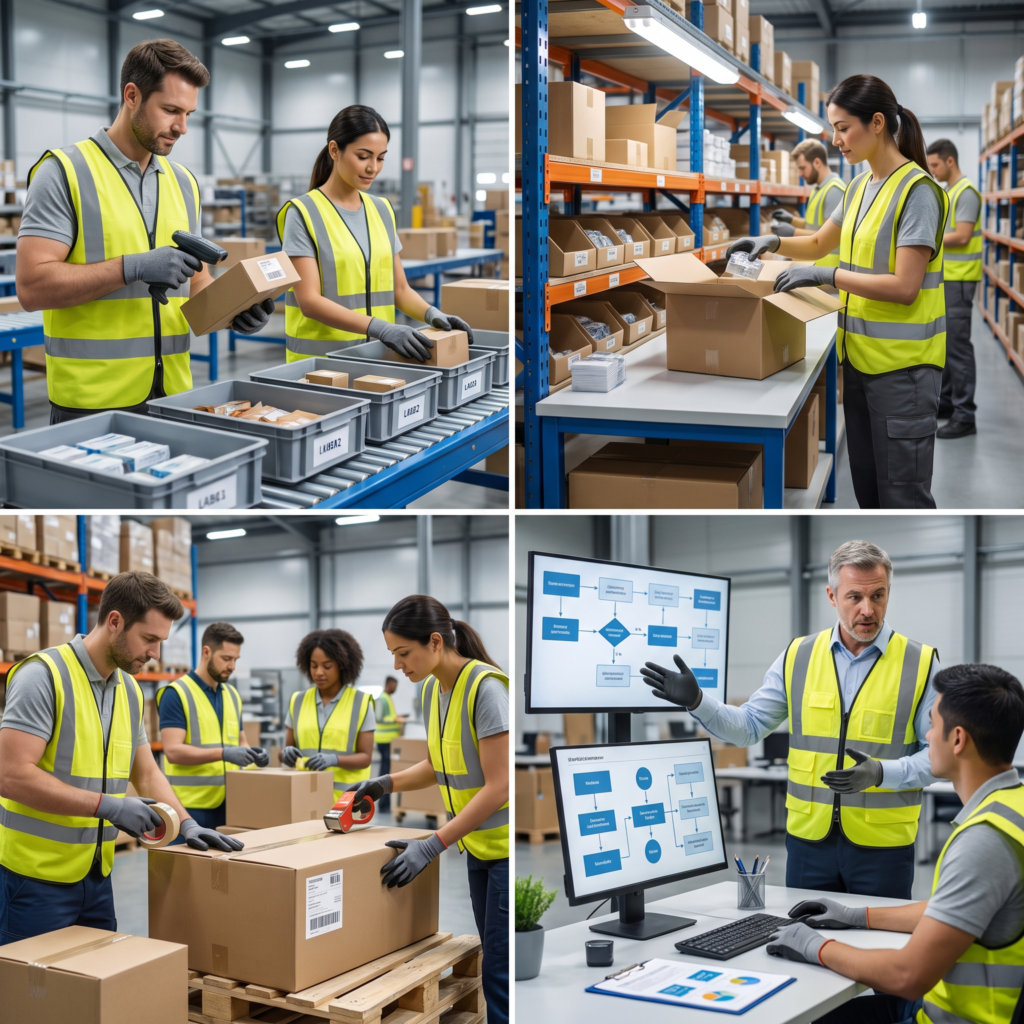
Supported employment often works best when employers look carefully at the actual tasks inside a job rather than relying only on broad job descriptions. This is where job design matters.
In warehouse, inventory, retail backroom, and fulfillment settings, box opening is a frequent task that supports the flow of materials through the workplace. It may sound basic, but it sits at the intersection of speed, safety, product protection, and workflow consistency.
When employers design this task well, it can become a strong part of a supported employment strategy.
That starts with a few simple principles
1. Standardize the method. Employees should be taught one clear and repeatable way to open cartons safely.
2. Use the right tool. The tool should reduce injury risk while still allowing efficient work.
3. Train in steps. Break the task into teachable actions rather than assuming workers will figure it out informally.
4. Measure quality. Accuracy, safety, and product protection should matter as much as speed.
5. Build confidence early. Early wins matter. When employees feel secure performing a task, independence grows faster
This kind of task design supports more than the individual employee. It also helps supervisors, trainers, and operations leaders build a more dependable process.
Supported employment is not about lowering standards. It is about designing work so people can meet standards more consistently. In the case of box opening, the right process can make the work safer, clearer, and more scalable for everyone involved.